Dried date
Knowledge

A real all-rounder

Dates: Origin in the Orient
Did you know that date palms can live for over 100 years? Since their origin in ancient Mesopotamia, numerous different date varieties have been developed in sunny, warm countries. The 10 to 30 meter high date palms grow in large palm gardens and bear fruit for the first time after five to six years. Farmers in northern Africa then harvest the fresh dates every two years.
Dried dates find their way to Europe, where the natural dates are very popular as a snack. Among the dried fruits, the "Deglet Nour" variety from Tunisia and Algeria is particularly notable for its taste. The "fingers of light" are even considered to be the best dates in the Arab world! Where does their name come from? In the sunshine, the tender flesh of the fresh date reveals its hard stone.
Variety in the kitchen
Dates are real all-rounders in the kitchen - thanks to their pleasant honey-like taste, they harmonize as an ingredient in both sweet dishes and spicy dishes with meat. Their delicious and natural sweetness* can be used to refine muesli or a smoothie in the morning. And as a quickly prepared sweet snack, dates score highly at Christmas and on festive occasions. During Ramadan, Muslims traditionally end their daily fast with a sweet date and water.


The dried, natural dates taste particularly good with nuts. The mild taste of walnuts or the fine roasted aroma of blanched almonds make for a delicious fruit and nut combination. Do you like it fruity and salty? Then combine the dried dates - the so-called "bread from the desert" - with fine Australian macadamia InSalt from Farmer's Snack.
* Contains sugar by nature.
** Reference quantity for an average adult 8400kJ, 2000 kcal.
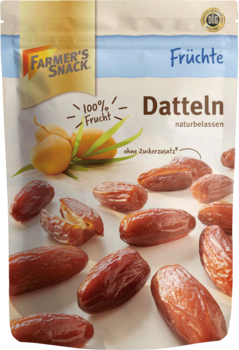
Datteln
• naturbelassen• ganze Frucht• ohne Stein• Sorte Deglet-Nour• Snack-Dattel
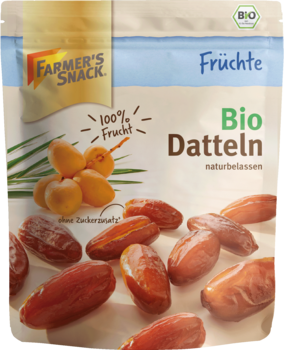
Bio Datteln
• Bio-Qualität• naturbelassen• ganze Frucht• ohne Stein• Sorte Deglet-Nour

Date paste
Chocolate dates with nuts
